
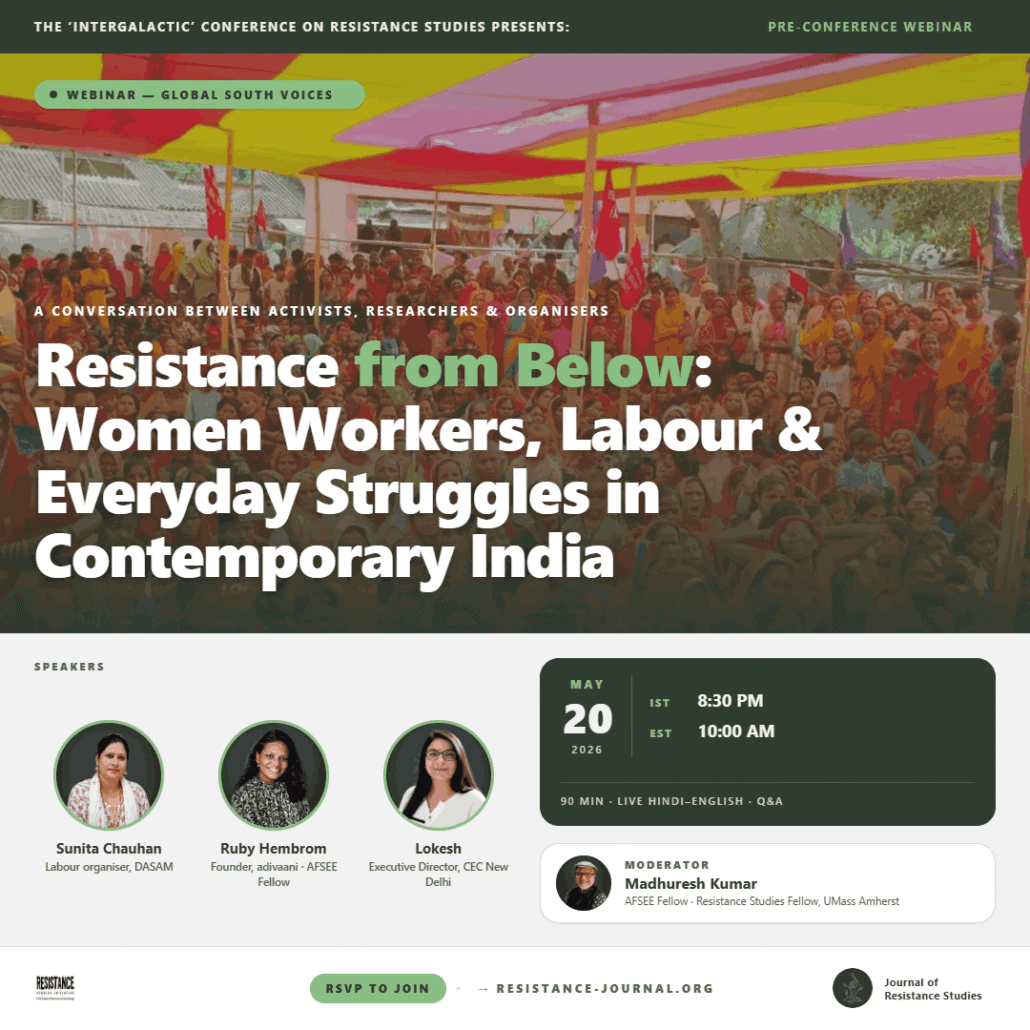
This webinar will focus on the lived experiences, organising practices, and everyday forms of resistance of Dalit and Adivasi women workers in India. It will pay particular attention to workers in sanitation, domestic work, the garment sector, brick kilns, and tea gardens.
The session is envisaged as a conversation bringing together activists, researchers, and organisers who are directly engaged with these struggles and the broader world of work. It will explore how resistance is enacted in everyday spaces – homes, streets, factory floors, tea gardens, and informal workplaces – often outside formal unions or recognised political arenas.
Key themes will include caste, indigeneity, gender, and labour; dignity and survival under conditions of informality; forms of organising and solidarity emerging from below; and the ongoing challenges of visibility, recognition, and state accountability. The discussion will also reflect on what these struggles contribute to broader debates in resistance studies, particularly from Global South perspectives.
Format
– 90-minute webinar (including discussion)
– Live interpretation (Hindi–English)
– Interactive Q&A
Acknowledgment
The research is part of an oral history project supported by the Atlantic Fellows for Social and Economic Equity (AFSEE)