University of Massachusetts, Amherst, USA
June 18-21, 2026 

Submit your abstract, panel, or workshop proposal soon!

00
Days
00
Hours
00
Minutes
00
Seconds

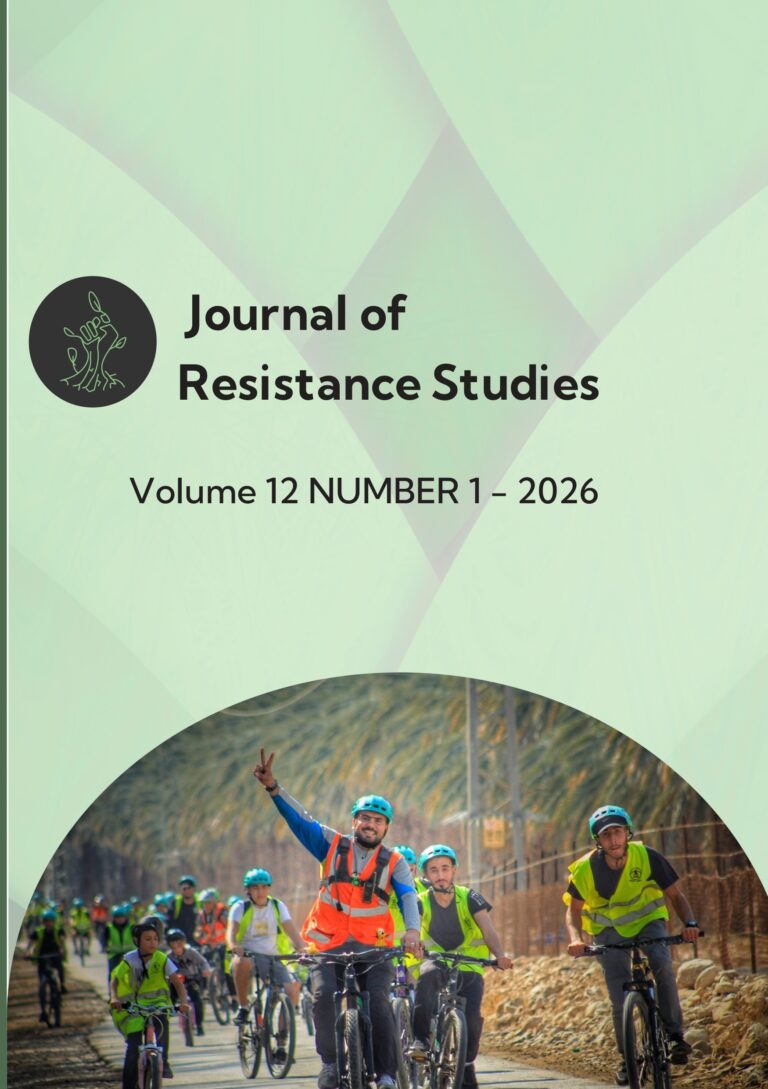
Journal of Resistance Studies

The first journal dedicated to developing the field of Resistance Studies.
Where to, resistance studies?
Brian Martin
The field incorporates diverse theoretical perspectives and draws on numerous academic disciplines. For contrast, think of social movement studies, where most of the attention is on the activities of ...
Nonviolent resistance failure: internal reasons why campaigns struggle to win (and what we can learn from it)
Lea Bonasera
Existing literature on nonviolent resistance typically emphasizes the elements that contribute to a campaign’s success. Conversely, mechanisms leading to the failure of such nonviolent resistance camp...
From Ordinary to Revolutionary: Dynamics of Mobilization in the Egyptian Revolution
Mohamed El Meadawy
The Egyptian revolution of 2011 was one of the earliest waves of the Arab Spring. Within only 18 days, Mubarak was forced to step down, ending thirty years of authoritarian rule. This study seeks to e...
Mashrou’ Leila’s Musical Affective Politics: Queer Resistance in the Egyptian Social and Political Uprising
Izat ElAmoor
On June 14, 2020, queer Egyptian Sarah Hegazy died by suicide in Canada, where she was exiled shortly after her release from prison in Egypt for raising a rainbow flag during a Mashrou’ Leila (ML) con...
‘Everyday Constructive Resistance’: Exploring Bottom-Up Transformative Change
Monica Carrer
Stellan Vinthagen
This article delves into the interplay between everyday peace, everyday resistance, and constructive resistance, exploring their potential for transformative change. Drawing insights from case studies...
Populism, ‘Empty Signifiers’ and Indigenous Resistance in Canada
Matthew Robertson
What are the implications of emergent populist forms of politics and the related use of ‘empty signifiers’ for Indigenous resistance movements in Canada? This article introduces the theories of populi...
‘The Harvest is a Poem’: everyday practices as culture and resistance in the occupied Palestinian territory
Aurélie Broeckerhoff
Laura Sulin
Mahmoud Soliman
Marwan Darweish
The Palestinian communities in the South Hebron Hills (Masafer Yatta), occupied Palestinian territory (oPt), face double marginality: from the Israeli occupation and within Palestinian society. In the...
Celebrating Johan Galtung, with Dignity not Deification
Matt Meyer
Excerpt: As Secretary-General of the International Peace Research Association (IPRA), which Johan helped to found in 1964, I was pleased to lead a brief discussion at the Asia-Pacific Peace Research A...
Editorial Volume 9, Number 1 - 2023
Jørgen Johansen
Craig S. Brown
Editorial Volume 9, Number 1 - 2023. Excerpt: "As this issue of the Journal of Resistance Studies goes to print, we are in the process of employing a new person to have the daily responsibilities for ...
Mobile commons: resisting through art, rethinking politics, resetting democracy
Javier Toscano
This article inquires about the resistance tactics enabled through artistic or aesthetic devices made possible by the ‘mobile commons’, that is, the resources produced by people on the move (mostly ir...
‘Look at the happy bear here!’ The use of artivism in Extinction Rebellion Sweden
Leif Dahlberg
The article describes and analyses how the climate activist group Extinction Rebellion (XR) Sweden makes use of art as part of nonviolent direct actions, a form of action which often is referred to as...
Resistance with and against symbolic objects: material targets of resistance and symbolic recruitment in the American Revolution, the anti-Apartheid movement, and Just Stop Oil protests
Benjamin Abrams
Peter Gardner
This paper discusses the roles played by physical objects in resistance, drawing on three case studies: the dismantling of the statue of King George III during the American Revolution, the burning of ...
Structural violence and repertoires of resistance in South Africa
Hilde Ibsen
Penelope Engel-Hills
Carolina Jernbro
"South Africa is listed as one of the most unequal societies in the world. Communities in this country face the aftermath of apartheid segregation, coupled with present neoliberal development strategi...
Nonviolent Resistance in Bolivia’s Age of Neoliberalism
Reynaldo Tapia
Bolivia presents a unique case of the effectiveness of nonviolent resistance aimed not only at countering neoliberal policies but also changing the power relations within the country. This article exa...
Conscription Refusal as Political Resistance
Janne Flyghed
Since the law on universal conscription was passed 1901, there has been a debate in Sweden concerning how to deal with those who refuse military service. The state faces a dilemma: on the one hand mai...
Editorial
Craig S. Brown
Sabeth Kessler
Ilaria Tucci
Excerpt: The papers included in this special all enhance the understanding of contribution of the arts to peace and resistance, as can be seen from the following brief summaries.
Artpeace: Validating Power, Mobilising Resistance, and Imagining Emancipation
Oliver P. Richmond
Art has apparently followed political power for much of history, while avoiding representations of social, subaltern, and political resistance, or experimentation with new approaches to emancipation. ...
Beyond “Individual” or “Collective” Resistance: Assessment towards an Agenda for Future Research on Dissent
Mona Lilja
Stellan Vinthagen
Kristin Wiksell
We argue that studies of resistance have suffered from a bifurcation of fields, whereby some focus on organized forms (social movements, civil society or revolutions), while others are concerned with ...
The need to document, evaluate, and develop actions and strategies of resistance
Jørgen Johansen
Excerpt: "In this issue, we have articles that again expand, develop, and clarify what resistance studies are about. The number of academic fields that include research on resistance is growing rapidl...
Thinking communicatively and relationally about practices of resistances
Sophie Del Fa
Geneviève Boivin
Ann-Sophie Boily
Ève Leclair
By reviewing the literature on practices of resistances in social sciences, organization studies, and communication, this essay aims to show how a communicative relationality perspective anchored in t...
Editorial, Volume 8, Number 1 - 2022
Craig Brown
Excerpt: "From 1st to 4th June 2022, the European Peace Research Association (EuPRA) held its biannual conference in Tampere, Finland. Titled ‘Empowering Peace: The Role of Civil Society in Peacebuild...
Overcoming the ‘Barrier of Fear’ in Order to Resist: the 2020 Protests against the Lukashenko Regime in Belarus
Craig S. Brown
In August 2020, widespread open resistance emerged against Lukashenko’s regime in Belarus, in the wake of the presidential elections. Through a media content analysis, this paper assesses how the emot...
Humanitarian Grass-roots work in Refugee Resettlement during the Trump Administration: A Study of Constructive Resistance
Barbara Franz
The COVID-19 pandemic, in combination with the Trump administration’s anti-immigration policies, has led to policy shifts and temporary bans that essentially ended asylum and refugee resettlement in t...
A Resistance History of India
Stellan Vinthagen
This article takes a historical view on the Indian civil society; its actors, strategies and issues, and evaluates its democracy-promoting resistance, and the impact from globalization. After a brief ...
Everyday Resistance of Trainee Therapists under Clinical Supervision
Wan-Juo Cheng
Supervisee resistance is often construed as an execution of their power to diminish the effects of the supervisors’ power in the field of counseling psychology. Such a limited view of resistance may i...
Expanding Resistance, Expanding Resistance Studies
Matt Meyer
Excerpt: "As Secretary General of the International Peace Research Association (IPRA), I am often asked to comment on the state of ‘the field’ of peace studies. Peace research and what is now commonly...
What is the core of resistance studies? To challenge conventional perspectives on resistance?
Stellan Vinthagen
Excerpt: "Seven years into the successful establishment of the Journal of Resistance Studies (JRS), it seems appropriate to make some reflections on what makes ‘resistance studies’ its own field; an a...
The Method of Political Resistance and the Concept of the ‘People’ in Tosaka Jun and Enrique Dussel
Dennis Stromback
It is rather common to couple Japanese Marxist Tosaka Jun (1900-1945) with critical theorists like Walter Benjamin or Theodor Adorno in the comparative philosophy literature, but little, if anything a...
Violence in Nonviolent Action: Power Relations in Joint Activism in Israel and Palestine
Anne de Jong
This paper critically engages with nonviolent activism and resistance in Israel and the Occupied Palestinian Territories. By placing nonviolent direct actions directly in the context of its violent su...
Rural Women in the Balkh and Herat Provinces of Afghanistan Simultaneous Resistance to, and Reproduction of, Patriarchal Power Structures
Sarah Louise Edgcumbe
"This article will examine how rural Afghan women employ practices of everyday resistance as a means of challenging extremely patriarchal power structures and male domination in Afghanistan. The resea...
Techniques of Resistance through Weaponization of the Body During Palestinian Hunger Strikes
Ashjan Ajour
This article conceptualises the techniques of resistance developed by Palestinian hunger strikers. Through the weaponization of the body they seek to disrupt the techniques of power exercised over the...
Glocal Resistance and De-colonisation
Ane Marie Ørbø Kirkegaard
This piece concerns civil society as conceptualised in Khatami’s book Islam, Dialogue and Civil Society, and in a wider sense the Dialogue among Civilisations and Cultures paradigm and the UN year of ...
Hezbollah’s Dilemma: between Resistance and Sectarianism
Abed Kanaaneh
The social mobilization (Hirak in Arabic) started in Lebanon on 17.10.2019 has been an unprecedented event in the modern history of Lebanon, for it has lasted for more than half a year, but most impor...
To Strike Together: Conflict Rituals and the Situational Power of Nonviolence
Isabel Bramsen
What is conflictual interaction? How does it differ from domination? And how can domination and violence be disrupted by nonviolent direct action? In this article, I will theorize conflictual and viol...
The Mobilisation of Deviance as Counterrevolutionary Technology in Egypt
Amira Abdelhamid
In a 2011 interview, then-Vice President Omar Suleiman declared that Egyptians are not ready for democracy, in response to mass anti-regime protests around Egypt. More peculiarly, protesters have been...
The Journal of Resistance Studies initiates collaborations with academic associations and activist communities
Jørgen Johansen
Stellan Vinthagen
Excerpt: "There exist thousands of journals, and as a reader it is not easy to find the journals that write on topics you are really interested in and publish the kind of high quality work you want to...
Making a Scene: Young Women’s Feminist Social Nonmovement in Cairo
Nehal Elmeligy
This paper argues that some women in Cairo, Egypt are part of a feminist ‘social nonmovement’ that predates the 2011 revolution, where they ‘make scenes’, i.e. commit acts of everyday feminist resista...
Levelling the Political Playing Field: How Nonviolent Resistance Influences Power Relations After Democratic Transition
Markus Bayer
Felix S. Bethke
Daniel Lambach
Nonviolent resistance (NVR) is being used successfully as a strategy to depose dictators and achieve political change around the globe. This study explores how NVR not only advances democratic transit...
Gene Sharp: More Anarchist than Neoliberal
Craig Brown
In the wake of the so-called Arab Spring, early efforts to explain the events in European and US media focused on the influence of the ideas of nonviolence scholar Gene Sharp. Irrespective of the accu...
Beyond Hunger Strikes: The Palestinian Prisoners’ Movement and Everyday Resistance
Julie M. Norman
Studies on prison-based resistance often focus, understandably, on the phenomenon of hunger strikes. However, most collective hunger strikes are preceded and complemented by other types of resistance,...
Literal Tricks of the Trade. The Possibilities and Contradictions of Swedish Physicians’ Everyday Resistance in the Sickness Certification Process
Mani Shutzberg
This article deals with the ways Swedish General practitioners (GPs) informally deal with the stricter standards of sickness certification and the implications of understanding these ways in terms of ...
Recognizing Everyday Activism: Understanding Resistance to Facial Recognition
Nora Madison
Mathias Klang
The widespread implementation of facial recognition systems as a tool for live surveillance is challenging the ability of individuals to be anonymous in public, and through this, addressing the level ...
Mobile Ambivalence at Standing Rock: surveillance, antagonism, and mobility at the Dakota Access Pipeline protests
Tyler DeAtley
The protests surrounding the Dakota Access Pipeline were marked by ambivalence, both in the blurring of protest spaces and in the interactions in digital spaces surrounding the protest. The Facebook c...
RESIST: Examining Black Lives Matter in the Changing Landscape of Social Trust
Shauna A. Morimoto
Diana Cascante
#BlackLivesMatter represents a quintessential example of digital resistance. The tenets of democratic change, however, rely on building social capital and social trust to sustain democratic action. Th...
The Rainbow Flag as Part of the ‘Apartheid Wall’ Assemblage: Materiality, (In)Visibility and Resistance
Anna Johansson
This paper explores the case of a mural, Through the Spectrum, painted with the colors of the rainbow flag in 2015 by the Palestinian visual artist Khaled Jarrar on a section of the 'Apartheid Wall' s...
Do military leaders resist organizational challenges?
Aida Alvinius
Arita Holmberg
Eva Johansson
Armed forces in many Western countries have been facing societal change processes for more than twenty years, including value changes, government savings, and more recently, an unstable security envir...
What we (do not) want to publish in the Journal of Resistance Studies
Jörgen Johansen
Stellan Vinthagen
Entering the fifth year of publishing JRS, we can look back at a number of articles on a wide variety of topics within resistance studies. The interest is growing, and the field of resistance studies ...
Institutional resistance to transparency: the quest for Public Sector Information in Mexico
Guillén Torres
Despite the popularization of progressive Freedom of Information and Open Data policies, both transparency practitioners and academia have warned about an increase in attempts to control and reduce th...
Riots as Civil Resistance Rethinking the Dynamics of ‘Nonviolent’ Struggle
Benjamin S. Case
This paper challenges the conventional dichotomy between violence and nonviolence in civil resistance studies, arguing for a more nuanced understanding of violent actions within social movements. Whil...
The internationalisation of nonviolent resistance the case of the BDS campaign
Marwan Darweish
Andrew Rigby
This paper analyzes the factors that contribute to the success of international civil society solidarity networks, using the Boycott, Divestment, and Sanctions (BDS) movement as a case study and compa...
Linguistic Resistance: Establishing, Maintaining and Resisting Truths
Eva Lilja
Mona Lilja
This paper explores how activists—particularly those focused on human rights, gender, and environmental issues—utilize repetition as a communicative strategy to challenge and transform discourses. It ...
Mining Conflicts in Peru Civil Resistance and Corporate Counterinsurgency
Michael S. Wilson Becerril
Studies of protest have argued that repression “backfires”—it activates indignation and galvanizes resistance. However, most activists know that this is not always the case. When does repression actua...
Constituting Self-Violent Resistance: Materiality, Embodiment, and Speech Acts
Brandon Sims
Dramatic self-violent acts, such as self-immolations and hunger strikes, often draw attention, but do not interpret or constitute themselves. In this article, theories of embodiment, materiality, and ...
Travelling Artefacts: The Role of Recognition, Belongings and Acts of Resistance
Mona Lilja
Lena Martinsson
This paper, by using manga comics and the veil as examples, argues that increased scholarly attention to artifacts involved in political struggles could add new insights to previous research on resist...
The Materiality of Resistance: Resistance of Cultural-Material Artefacts and Bodies
Anna Johansson
Mona Lilja
Lena Martinsson
Excerpt: This editorial, and the collection of articles in this issue, provides new insights into the knowledge that a focus on materiality can offer us, particularly with respect to various resis...
Resistance, Materiality and the Spectre of Cartesianism: A Contribution to the Critique of Feminist New Materialism
Evelina Johansson Wilén
Carl Wilén
An important camp within the emerging field of resistance studies has been characterized by a tendency to study and theorize matters of culture, language, and discourse at the expense of matter itself...
Investigating nonviolent action by experimental testing
Brian Martin
Majken Jul Sørensen
Strategic nonviolent action has developed enormously over the past century: there is a burgeoning body of research, widespread use in social movements, and regular training of activists. Even so, unde...
Accessing the Backstage: Ethnographic Research Methods in Resistance Studies
Minoo Koefoed
This article aims to critically discuss particular advantages, disadvantages, and challenges concerning ethnographic research within Resistance Studies. By so doing, four methodological aspects of eth...
Resistance or Complicity, Songs of Changkhup: An Ethnographic Approach to Exploring Sipsongpanna Tai Lüe Oral Media in Contemporary China
Kefan Yang
In contemporary China, many ethnic minority groups such as Tibetans, Mongolians, Miao, and Tai have their own oral cultures, functioning as oral media. Tai Changkhup, for example, verbally disseminate...
An Exit from the Garbage City: Resistance and “Chikonko” in Zambian Waste Management
Clive Mutame Siachiyako
Erica von Essen
Elin Ångman
This study examines citizens’ responses to exclusions, injustices, and power asymmetries in the context of public participatory processes in solid waste management within the Mtendere township in Lusa...
Resistant Materialities and Power Tools: Dynamics of Power and Resistance in Everyday Consumerism
Otto Von Busch
In an everyday perspective of resistance, there is a tendency to favor human action and agency, both in the exercise of power or in the acts of resistance. The aim of this study is to examine material...
Queer Hate and Dirt Rhetoric: An Ambivalent Resistance Strategy
Cathrin Wasshede
This article examines the queer use of hate and dirt as a form of resistance. Through analysis of a selection of Swedish queer activists’ self-representations on the Internet, the article’s aim is to ...
Glorifications and Simplifications in Case Studies of Danish WWII Nonviolent Resistance
Majken Jul Sørensen
Danish resistance to Nazi occupation during WWII is frequently used in literature on civil resistance as an example of how nonviolent resistance has been improvised. Considering the newest historical ...
The development and future of Resistance Studies
Jørgen Johansen
Excerpt: One of our goals is to develop and define the field. What shall Resistance Studies focus on? We have conscientiously searched for, and accepted for publication, articles that expand the list ...
Social Movements and Resistance Studies in Neoliberal Times
Massimiliana Urbano
This article addresses the challenges that resistance and social movement studies face within the framework of neoliberal academia, specifically focusing on the role of ethics review committees. It ar...
Resistance Studies as an Academic Pursuit
Mikael Baaz
Mona Lilja
Stellan Vinthagen
Resistance is both a common and somewhat unusual concept. It appears often in political debates and the media. Members of various non-governmental organizations and social movements also frequently us...
Researching Resistance: Methodological Challenges, Ethical Concerns and the Future of Resistance Studies
Anton Törnberg
While reviewing the submissions for this special issue, I noticed that none of them ventured predictions about the future of Resistance Studies. This is likely due to the discipline's emphasis on expl...
Activist Ethics: the Need for a Nuanced Approach to Resistance Studies Field Research
Joanna Allan
This paper addresses a significant gap in the literature by exploring the ethical challenges faced by researchers working with resistance activists in conflict zones, using the case study of Moroccan-...
Under a Rebel Flag: Social Resistance under Insurgent Rule in Aceh
Shane J. Barter
Resistance is difficult in the best of times and is especially challenging in authoritarian settings. How does social resistance play out in violent armed conflicts, an extreme non-democratic context?...
We continue to develop resistance studies
Stellan Vinthagen
In our work to develop resistance studies, we need to find ways to keep the contention with relations of domination alive and thriving, also when that domination is part of the academia. I do not have...
Unemployed Workers’ Movements and the Territory of Social Reproduction
Liz Mason-Deese
Unemployment soared in Argentina when the country fell into economic crisis in the late 1990s. Amid these dire circumstances, women took the lead in organizing resistance to the neoliberal policies th...
Queering Resistance, Queering Research: In Search of a Queer Decolonial Feminist Understanding of Adivasi Indigeneity
Padini Nirmal
In this paper, I place both the methodological and epistemological realms of my doctoral research with the Adivasis (indigenous peoples) of Attappady, Kerala under a queer decolonial feminist lens in ...
Decolonizing Australia’s Body Politics: Contesting the Coloniality of Violence of Child Removal
Sara C. Motta
In this article, I develop a critique of the continual historic and contemporary use of child removal to systematically pathologize and criminalize Black, Indigenous, and poor-white motherhood. I demo...
Ayotzinapa and Resistance Breaking history with narrative
Francisco Javier Gómez Carpinteiro
This essay explores the tragic events surrounding the murder of three students and the disappearance of forty-three others from the teacher training college "Escuela Normal Rural of Ayotzinapa" in Gue...
Constructive Resistance: Conceptualising and Mapping the Terrain
Majken Jul Sørensen
People living under systems of domination and exploitation engage in resistance in diverse ways, including building and experimenting with alternatives to the present. These efforts, often termed "con...
Telling Stories of Resistance and Ruination: Women Seeking Asylum
Kate Smith
This paper examines the relationships between narratives which have come to dominate in the twenty-first century about people seeking asylum and women’s stories of resistance and ruination. Identifyin...
Little feminism, but lots of feminists: Feminist resistance and the Scottish independence movement
Jenny Morrison
The Scottish independence campaign became a mass social movement against austerity in the lead-up to the independence referendum of 18 September 2014. The participation of the radical left in the camp...
Feminizing Resistance, Decolonizing Solidarity: Contesting Neoliberal Development in the Global South
Tiina Seppälä
Social movements in the global South have contested neoliberal development, a major cause of forced displacement, already for decades. Since it is usually the poor, low-caste women who suffer most fro...
Feminized Resistances
Sara C. Motta
Tiina Seppälä
Excerpt: In this special issue of the Journal of Resistance Studies, we aim to offer a tentative and thoughtful mapping of feminized resistances and subjectivities to help navigate these uncertain and...
Sexual and Spiritual R-Evolution through Animism: The Feminine Semiotics of Puppetry
Aja Marneweck
This article examines resistant representational strategies of the feminine through animism-based creative practices like puppetry. It engages with critical issues of identity, representation, and emb...
An invitation to Develop Resistance Studies
Stellan Vinthagen
Excerpt: The goal of advancing resistance studies is to deepen our understanding of resistance, but it's important to recognize that knowledge can be shaped to serve specific interests. There is no su...
Recoupling Groups Who Resist Dimensions of Difference, Opposition and Affirmation
Tristan Partridge
This article explores a shift in focus from the outcomes of collective action to the processes and cooperation forms that resistance groups create and embody. By rejecting imposed categories of differ...
Repertoires of Resistance: How Agency Fuelled Rhetoric, Resistance and Rebellion During Mao’s Housing Revolution
Angela Maye-Banbury
Little published research highlights how Chinese residents sought to resist state imposed housing policies when Mao Zedong was Communist Party leader (1949 - 1976) of the People’s Republic of China. B...
Some notes on the Journal of Resistance Studies and its exploration of “resistance”
Stellan Vinthagen
The interest and discussions that our first issue of the Journal of Resistance Studies created motivate a further clarification of our conceptual and theoretical standpoints. Several people – among th...
Citizen Science as Resistance: Crossing the Boundary Between Reference and Representation
Christopher Kullenberg
This article analyses citizen science as a resistance practice with regards to the contradictions that emerge when scientific methods are used for political struggles. Departing from how science and p...
Building Resilience to Repression in Nonviolent Resistance Struggles
Jason MacLeod
Nonviolent movements are more effective than violent ones and casualties will be fewer than if the resistance was waged through armed struggle. However, nonviolent movements are still not immune to re...
Play, Politics, & the Practice of Resistance
Daniel Møller Ølgaard
Politics are Fun Again. It is a seductive and influential image of our contemporary world that Jean Baudrillard presents. In the transition from the modern era of manual production to the postmodern a...
Securitization of civil resistance: Thailand’s military junta and beyond
Janjira Sombatpoonsiri
On May 22, 2014, Thailand witnessed its twelfth military coup. Despite deficiency in democratic legitimacy, the junta has thus far sustained mass support, while challengers to its rule are denounced a...

The Journal of Resistance Studies is an international, interdisciplinary and peer- reviewed scientific journal that explores unarmed resistance. The focus is on critical understandings of resistance strategies, discourses, tactics, effects, causes, contexts and experiences. Our aim is to advance an understanding of how resistance might undermine repression, injustices and domination of any kind, as well as how resistance might nurture autonomous subjectivity, as e.g. constructive work, alternative communities, oppositional ways of thinking.

Issues
0
Articles
0 +

NEWS: Upcoming Conference!

June 18-21 2025

Community Launch
Be part of a global community of scholars and activists dedicated to resistance
Click Here
Building Solidarity
Building networks, skills and solutions for resistance scholars and activists in times of repression.
Click Here
Opportunities
Take advantage of publishing and award opportunities.
Click Here

Stay up to date

Sign up to the Resistance Studies newsletter and don’t miss any publication announcement.

Name
Email *

Our latest issue is out!

Submitting to the Journal of Resistance Studies

We publish twice a year digitally and in print, with world-wide free shipping. All articles and issues are made open access two years after publication.

We invite journal articles or book reviews and debate contributions.

Call for Papers

Special Issue

Situated Resistance and Hope in the Everyday

In the global context of increasing authoritarianism and social exclusion, there is an urgent need to renew theoretical references and share practical knowledge from contexts where forms of resistance...
Deadline: January 15, 2026
Issue: Spring 2027

What do we want to see in submissions to Journal of Resistance Studies?

JRS receives more submissions than we can possible publish. Most of them are good articles with high academic standards. But that is not enough for the editorial board to accept them for publication. As a journal for a relatively new academic field it is important for us to publish texts that contribute to developing this specific field with theoretical ideas, high quality empirical material, interesting analysis, and/or cases from a wide spectra of societal contexts.

Crucial for inclusion in JRS is a clear focus on resistance and how acts of resistance influence power relations. That means that what constitute “resistance” and “power” (or “domination”) and how they relate need to be analyzed. It is important to understand that JRS is not simply one more journal on “social movements”. See our Policy Statement for more details.

All questions regarding the journal should be directed to: [email protected].

Login

Forgot your password? Click here to reset.

submit a presentation, panel or workshop proposal, or paper for the award

1
Get started
2
Last Page

Before we get started

Thanks for considering a submission to the 'Intergalactic' Conference on Resistance Studies! Before we get started, we just want to make sure that everything is ready.

The Call for Papers for the Conference is open to both academics and other people who implement resistance through activism, art, community, everyday efforts, and much more. All submissions, not matter your background, should:

  • Have a clear focus on 'resistance' and how resistance influences power relations
  • Contribute to our theoretical understanding of resistance; if you are not from an academic background, we still expect you to articulate coherently how your presentation or proposal contributes to our understanding and practice of resistance, for example, how you sharing your knowledge could help or enrich other activists or researchers

We are open to a wide diversity of worldviews and creative ways of presenting and engaging with resistance, whether drawing from literature, personal experience, cultural understandings or more.

For academic submission, it would be helpful for you to check out our policy statement.

If you have ready, we look forward to reading your submission. Let's go!

Type *
Title *
Correspondence email *
Enter the email you want to use for correspondence about the submission
Authors
ABSTRACT *
Describe your presentation, panel, workshop or paper. Max 500 characters
Would you like your paper to be considered for publication on the Journal of Resistance Studies?
Note: Full paper submissions will be required to be considered for publication. Deadline for full paper submission is May 1st, 2026.

Uploading your full text is optional, except if you are applying for the Award. For all other applicants, you will have the opportunity do upload a full paper later if you wish, by 1st May 2026.

Upload full draft
Maximum file size: 7 MB
Upload an editable Word document

Panel Proposals

Number of presenters

Tell us more details about your panel format (for example: individual presentations, discussion, roundtable, etc) and content (topic, title of presentations, whether the panel brings together researchers and activists, etc).

Panel description

We might suggest additional presenters to join your panel, who might be from academic or non academic backgrounds.

Do you expect the panel to be:

Workshop Proposals

Number of presenters

Tell us more details about your workshop format and content.

Workshop description
Do you expect the workshop to be:

What do you need for your workshop? Tell us what kind of room size and layout you need (or outdoor space), whether you need tables and chairs and in what disposition, whether you need any equipement such as screen, projector, whiteboard, sound systems, etc., or any additional information.

Room and infrastracture requirements

Send acceptance email to the author

Email text

Ask your institution to subscribe

Sign Up

Update status

Submit an abstract

Abstract Title
Name
Correspondence email
Enter the email you want to use for correspondence
Authors
ABSTRACT
Max 500 characters

Join the Resistance Studies Community

Are you a researcher or activist interested in nonviolent resistance?

We’re building a community of scholars, activists, and thinkers dedicated to understanding and advancing nonviolent resistance through research and action.

By subscribing to our mailing list, you will:

  • Stay updated on new research and articles that push the conversation forward.
  • Be notified of open calls for papers and get reminders about dates and deadlines.
  • Connect with a growing network of people who, like you, are committed to making a difference.

Our vision is to build a space for collaboration and collective growth. We are interested in hearing from you, learn about new perspectives, think about opportunities for more join initiatives and creative ideas to advance nonviolent resistance. All of this can be possible if we keep in touch with likeminded thinkers.

 Let’s build this movement together.

Sign Up to Our Email List

Name
Email *

Buy Issue

EMAIL *

Buy article

EMAIL *

Sign Up

Name *
Username *
E-mail *
Password *
Confirm Password *
Subscription type *
shipping address
0.00

Sign Up

Name *
Username *
E-mail *
Password *
Confirm Password *
Subscription type *
0.00

Apply for a custom subscription

What best describes you? *
Name *
Email *
Country

How can we help your members get access to our content? Do you need IP access? Tell us about your technical needs.

Your digital access needs

Finally, tell us a bit about yourself, how will access to the Journal benefit you, and why you need a fee price adjustment.

About you

Ask your institution to subscribe

1
2
3
4
Last Page
Full name *
Your email *
Institution *
The name of your University/ library/ institution

Please provide the email address of the contact person at your institution who is most likely to approve and bring forward your application. It could be a supervisor, librarian, head of department, depending on your institution's approval system.

Email of your institutional representative
Email of a contact person at your University or library
Role at your institution *
for example: student, lecturer, etc
ID Number at your institution
For example: student ID, library, etc

TIP: Tell you institution why you need this subscription. You may want to provide details about your research or studies, and why you believe this is a great journal to subscribe to.

Message

Once you submit, an email will be generated and sent to your institution.

Thank you so much, we hope you will be successful in your request, and that you will enjoy our journal. Finally, we hope you will be happy to join our community, stay in touch with us, and contribute to Resistance Studies.

Submit an article

1
Get started
2
3
Last Page

Before we get started

Thanks for considering a submission to the Journal of Resistance Studies! Before we get started, we just want to make sure that everything is ready. JRS receives more submissions than we can publish. As a journal for a relatively new academic field, it is important for us to publish texts that contribute to developing 'Resistance Studies' with theoretical ideas, high quality empirical material, interesting analysis, and/or cases from a wide spectra of societal contexts.

Does your article:

  • Have a clear focus on 'resistance' and how resistance influences power relations?
  • Contribute to our theoretical understanding of resistance, or is a better fit for the sociology of social movement field?
  • Include an abstract, citations, and a reference list?
  • Does it follow the guidelines in our policy statement?

If you have answered yes to these questions, we look forward to reading your submission. Let's go!

Type
Title
Correspondence email
Enter the email you want to use for correspondence about the submission
Authors
IS THIS SUBMISSION FOR AN UPCOMING SPECIAL ISSUE?
ABSTRACT
Max 500 characters
Upload full draft
Maximum file size: 7 MB
Upload an editable Word document

Anonymous version
Maximum file size: 7 MB
Upload an article that does not include authors' names and identification

Sign Up

Name
Username
E-mail *
Password *
Confirm Password *
Subscription type *
Shipping address
Would you like to set IP access?
IP Addresses
Enter as many as you need

Sign Up

Name *
Username *
E-mail *
Password *
Confirm Password *
0.00
Subscription type *
shipping address